
Using a Case Study to Build a B2B Content Campaign Around a Successful Technology Deployment
When you’re marketing a B2B service or product, the budget has to stretch in several directions. There’s a website to maintain, a sales team to support with relevant materials, campaigns to run across email and socials, and, hopefully, a conveyor belt of impactful customer stories to share across those channels.
In that context, content campaigns that repurpose and reinforce your adoption stories are a must. The starting point for me is always the case study. If you’ve invested in research, stakeholder interviews, and a substantial piece of writing, you should be thinking about where else across your customer touchpoints that storytelling could resonate.
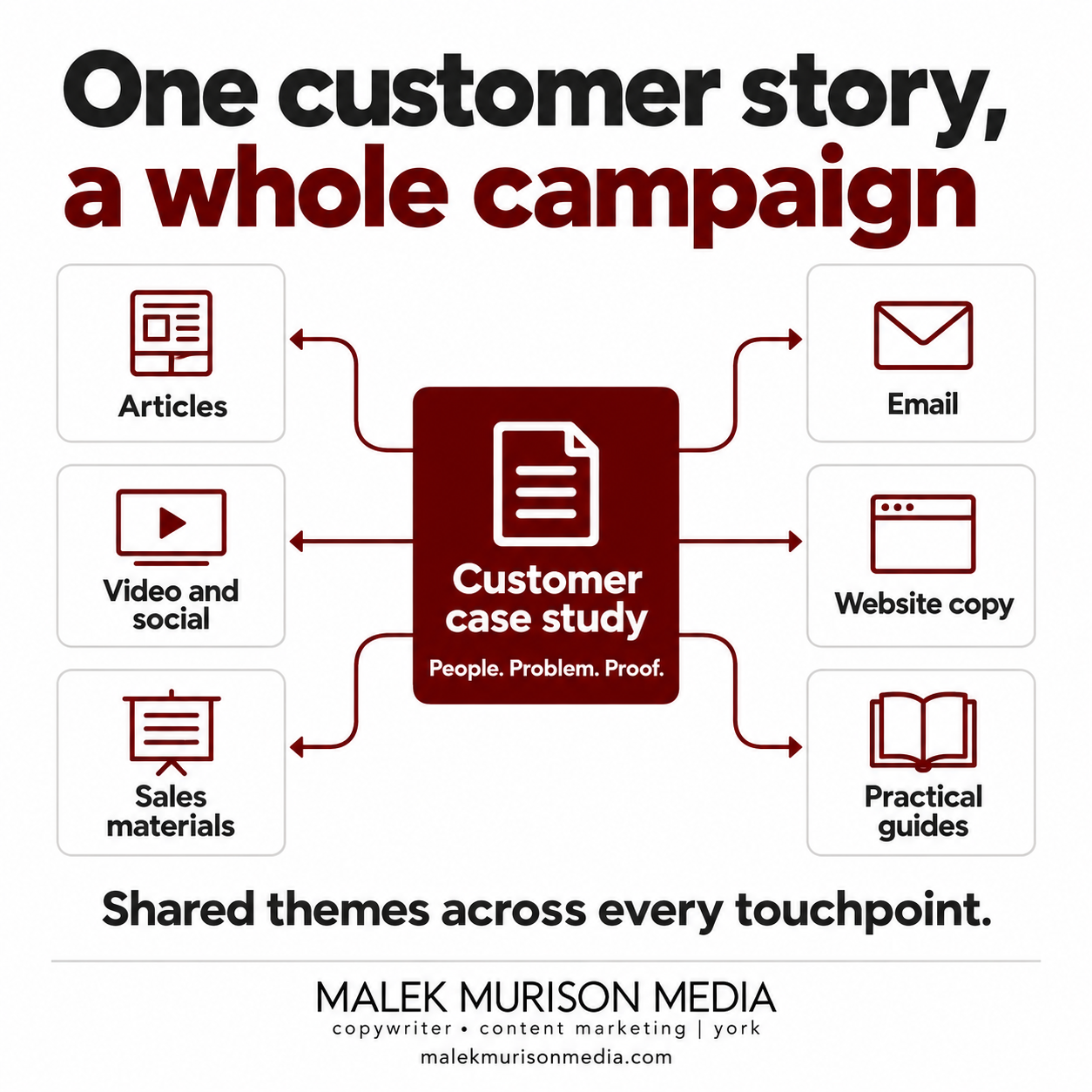
A strong customer case study is the perfect foundation for a content marketing campaign because it brings together the problem your technology addresses, the people who can benefit, and proof of your solution in action. Break it down, and that material can be repurposed and expanded to support a wider campaign, with shorter but related articles, landing pages, emails, guides, videos, social posts, sales collateral and more.
The opportunity is to develop a campaign that carries key themes and USPs across every touchpoint. Future customers might encounter the story in a short video, explore it on your website and later receive a summary from your sales team. Each piece can and should be tailored to the medium in question, while reinforcing why your product matters.
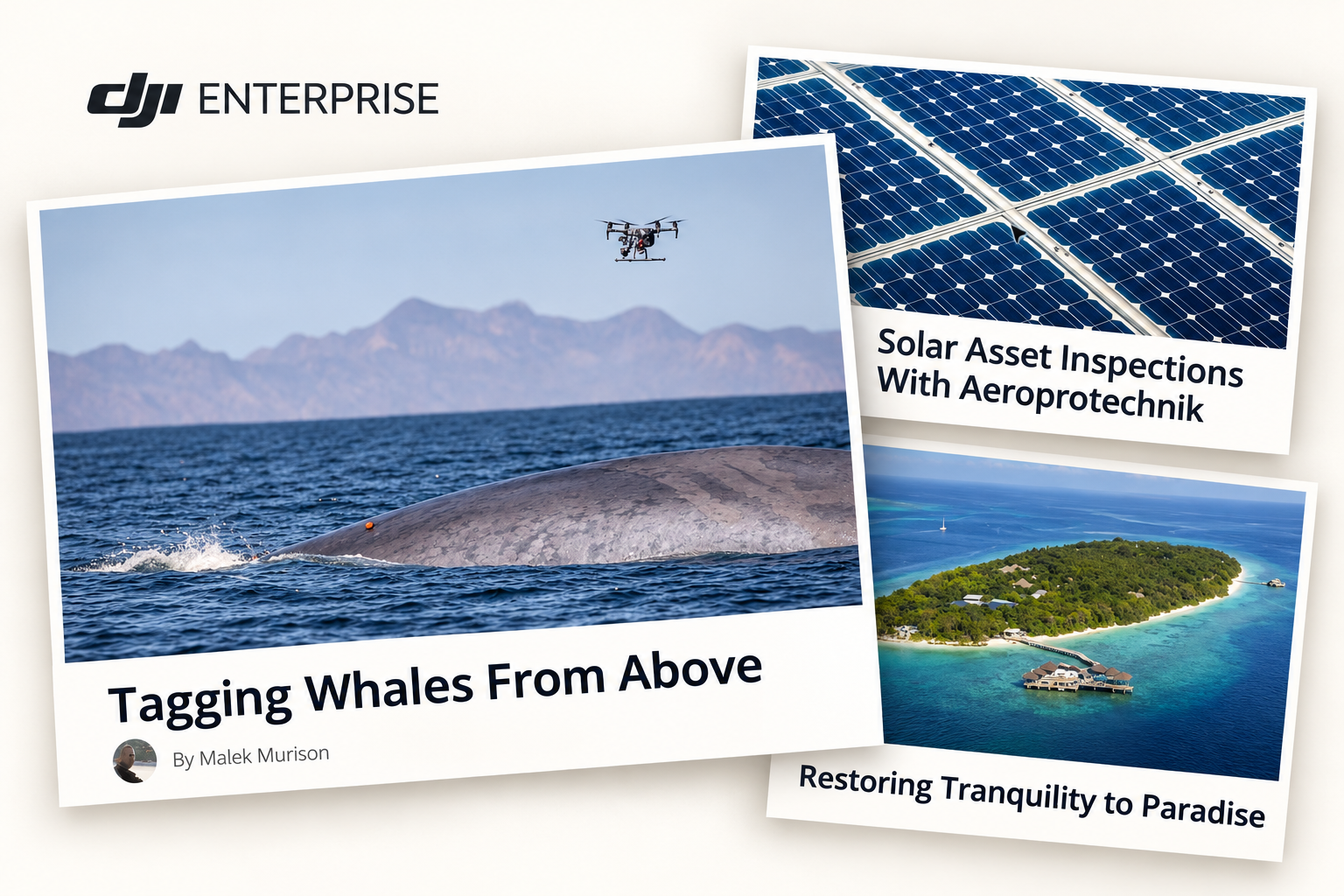
I've seen this process play out through my work with DJI Enterprise. My case studies and customer stories have been used as long reads, sales collateral, landing pages, email updates, and even developed into mini documentaries. (For some of those films, my script and storyboarding work was another chance to distill the story for another format.)
You get the point: There is a huge amount of value in the work that goes into a case study. A coordinated campaign gives that storytelling more surface area to make a difference.
Here are the steps to turn a powerful case study into a campaign that goes further.
Step 1: Find the story that makes your technology matter
Many technology stories sound fairly unremarkable when described through the mechanics alone: A robot moves some items. A platform processes data. A sensor measures changes.
The interesting part is often what happens to the people around that technology adoption. Who benefits? What can someone can do with that new capability? What is its impact compared to an established approach that is difficult, expensive, dangerous, or impractical?
My DJI case study on Ocean Alliance's whale research is a great example. The conservation team used modified drones to drop suction-cup research tags on whales. The project brought together marine scientists, engineering ingenuity, and a desire to gather data without disturbing the animals or putting researchers in danger.
With so many angles, we had all the ingredients for a viral piece of storytelling. There was a scientific challenge to explore, along with an inventive response that wouldn’t be possible without DJI’s technology. It also happened to be incredibly visual in nature. After all, it doesn’t get much more cinematic than flying a drone above a whale and tagging it from above.
Of course, not all stories arrive so perfectly formed. But the same approach applies to less spectacular tech deployments. A maintenance team finding faults earlier, a laboratory processing samples more reliably, or a local authority understanding where to intervene can all provide the ingredients for a powerful case study. The writer's job - my job - is to set the scene, establish the challenge, explore what changed, and show why that change matters to the people involved.
Step 2: Gather material for the whole campaign
Another benefit of starting with a case study is scale.
Any decent case study requires research, interviews with stakeholders and customers, and a good amount of writing to connect the dots and bring the story to life. As you can imagine, this process generates a lot of material.
The numbers involved usually provide a guide for the direction of the case study: This is what we achieved, this is how much we saved and how many hours we spent doing something more valuable.
But the interviews will uncover the glorious details that can be shaped into a compelling narrative. What was the customer trying to do? What was getting in the way? Why did they choose this approach? What happened once it was deployed?
It’s my opinion that a wider content campaign needs those secondary questions that explore decisions, events, and consequences of the technology in action.
For sales material, that might mean understanding what the customer needed to establish before committing. For an expertise-focused article, it could mean exploring a misconception about the application. For your related email sequence, you might uncover an offhand comment from a customer that resonates more than anything you’d come up with from hours of brainstorming.
Collect the supporting material alongside those answers: photographs, diagrams, deployment details, transcripts, footage and whatever evidence supports the results.
Agree the intended uses with the customer early, especially if interviews, photographs or footage will appear across several channels. A shared record of approved facts, quotes, images and claims can then support the different pieces.
This is also a sensible point to agree on the writer's wider involvement. Adapting a case study into a sales summary or a film script takes editorial work. Planning that work together makes it easier to carry the strongest material through.
Step 3: Decide on the themes that will run through your entire campaign
Before deciding how many content spin-offs to produce, you need to establish what the deployment helps you say.
One case study I worked on for DJI followed Southern Manatee Fire & Rescue's response to an ammonia leak. A drone helped the team investigate rooftop equipment and identify the source. It also gave commanders a live view of the response, while avoiding repeated reconnaissance trips onto the roof.
For a campaign built around a story like this, I would carry three themes through the material: better information for decisions, less unnecessary exposure to danger and better coordination between people working in different places. Technology is at the heart of it, but it’s also a very human story: the duty of care for co-workers, the bravery of first responders, and the importance of making their work as safe and efficient as possible.
Those themes give the campaign direction. A film can make the human stakes more tangible. An expert article can explore the information problem. A product-page example can connect a particular capability to its practical use. A sales summary can give a prospective customer something concrete to discuss with colleagues.
The emphasis might change depending on the audience and touchpoint. An operator may want to understand what they can see and how they use it. A programme lead may be thinking about procedures and training. A budget holder may need to understand what operational need the investment addresses and what ROI looks like in a given context.
Step 4: Incorporate key ideas into sales materials and website copy
The DJI case studies I wrote were ideal for repurposing into sales collateral. That reason is obvious: A well researched, evidence-based example of your technology making a difference is far more convincing than any promise you can make. And once you have that success story and its themes distilled into something bite-sized, those snippets are great for moving sales conversations forward.
A salesperson might share your case study video when a prospect asks whether the technology has been used in a comparable setting in passing at an event. The customer might forward that on to an operational colleague. The decision maker at the end of the line might be drawn in by the story and dig deeper before making a purchase.
The detail you preserve when repurposing here matters. A summary that removes key circumstances of the deployment can leave the reader with a broad claim and little basis for judging whether it applies to them. It’s a balancing act.
Case study findings can also be used as website copy to strengthen product and collection pages. Think of it as a supercharged testimonial. A short example beside a feature description can explain what that capability enabled in practice, with a route to the full case study. This is particularly useful when a specification needs some context before its value becomes clear.
Here you can also get into A/B testing and defining different paths according to different buyers and industries. A campaign landing page has more room to bring the pieces together. It can introduce the application, present the strongest evidence from your case study for that audience, and offer a relevant next step: reading the story, watching the video, exploring a guide or discussing a similar deployment.
Choose that next step around the audience arriving there. Someone following a broad conservation story may still be exploring what is possible. Someone clicking from a targeted sales email may already have a specific application in mind. The page should give each a sensible route forward without demanding that everyone follow the same sequence.
Step 5: Use articles and email to explore underlying questions and continue the conversation
The great thing about case studies is that they are necessarily a reflective process. In conducting interviews after the fact, you’ll often learn things about your customers that you didn’t know or appreciate enough before. Even interviews with internal stakeholders can shine a light on the adoption process and open up future ideas for development and collaboration.
My DJI piece about drone data and malaria interventions explored research into identifying mosquito larval habitats. One revealing detail was how the researchers changed their approach to obtaining imagery: working with local pilots allowed them to concentrate more attention on analysing the data.
That finding opened up questions beyond the individual deployment. How should specialist teams divide responsibility for data capture and analysis? What expertise do they need internally? In what contexts does can an external partner make an emerging technology more practical to use?
It’s easy to see how a broad case study can lead to a series of spin-off articles exploring those unearthed questions, adding specialist commentary and examining the implications for other organisations.
Email campaigns are another great way to continue the conversation raised by the original case study, while amplifying the key themes in a more manageable format. Here you can also experiment with segmenting your email audience according to their areas of interest. Some readers in operational roles will want to read about training implications. Others with an interest in finance side of things might want the hard numbers behind the implementation. For a more technical audience, it might concern how the data was collected or interpreted. Existing customers might be interested in an application they could explore with equipment they already own.
You can draw from the same reporting while changing the question the email helps the reader answer. The familiar campaign themes remain, the routes into them shift according to the segmentation.
Step 6: Make the story work on screen
DJI regularly developed my case studies into videos and mini documentaries. My involvement in scripts and storyboarding for some of those films reinforced how much useful preparation sits in the reporting: the people worth hearing from, the sequence of events and the details that explain why a deployment matters.
A written story can move between background, interviews and technical explanation with relative freedom. A film needs a visual sequence that helps the viewer follow what is happening.
Ocean Alliance's whale-tagging project offered an obvious visual opportunity. A film can follow the relationship between the research team, the modified aircraft and the placement of a tag.
For less visually dramatic technology, the same thinking still helps. Show the task, the working environment and the person making a decision. A screen or sensor becomes more interesting when the viewer understands what someone is looking for and what they will do with the result.
Plan the shorter social edits while developing the longer film. A self-contained answer about a deployment challenge, a demonstration of one capability or a moment that explains the customer's motivation can each give a post its focus.
Each edit needs enough context to stand alone. Someone encountering a clip in their feed should be able to understand who is speaking, what problem they faced and why the moment matters. Captions and supporting copy can provide that context, while an appropriate link offers a way into the complete story.
This also gives social content more variety. One post can introduce the people. Another can explain a practical detail. A third can explore what the team learned. All three reinforce the same campaign themes through different aspects of the deployment.
Step 7: Answer the adoption questions

Ideally, a strong customer story will leave prospective buyers asking: what would it take to do this ourselves?
This is where you need to consider an alternate but parallel content strategy that is wholly educational in nature.
My DJI guidebooks on Fighting Fire with Thermal and building a search and rescue drone programme were used as lead magnets for first responders who had shown an interest in learning about drone technology - potentially after seeing some case studies of the technology in action. These guides addressed the practical questions around adoption, from understanding thermal imagery to choosing equipment, training teams and planning a budget.
A good case study can be one of many examples and lessons for a resource like this. All you need to do is add the technical guidance to the evidence, and help readers assess their own plans against best practices.
Step 8: Connect the content before you launch
Have the main story, relevant website content and sales summary ready when promotion begins. Give each supporting piece a clear destination: a social clip might lead to the full story; an article about implementation could lead to the guide; a webinar follow-up could offer a discussion about the attendee’s application.
Keep the campaign’s central themes visible in the headlines, examples and calls to action. If the story is about helping teams make safer decisions, each touchpoint should develop that idea through the evidence most relevant to its audience.
If the deployment has a newsworthy angle, consider specialist media too. An unusual application or research breakthrough gives you something to pitch, backed by the interviews, imagery and evidence already gathered.
Make your customer stories go further
A well-reported case study gives you human stories, evidence and a clear account of what your technology makes possible. Plan beyond the original article and that material can help prospective customers discover your product, understand its value and assess whether it could work for them.
Choose the formats that serve those decisions and carry the same key themes through each one. That is how the investment in research, interviews and approvals can support a coordinated campaign, with each piece adding to the audience’s understanding.
If you have a customer story with that potential, I can help develop it, from the initial interviews through to the articles, scripts and supporting campaign content.